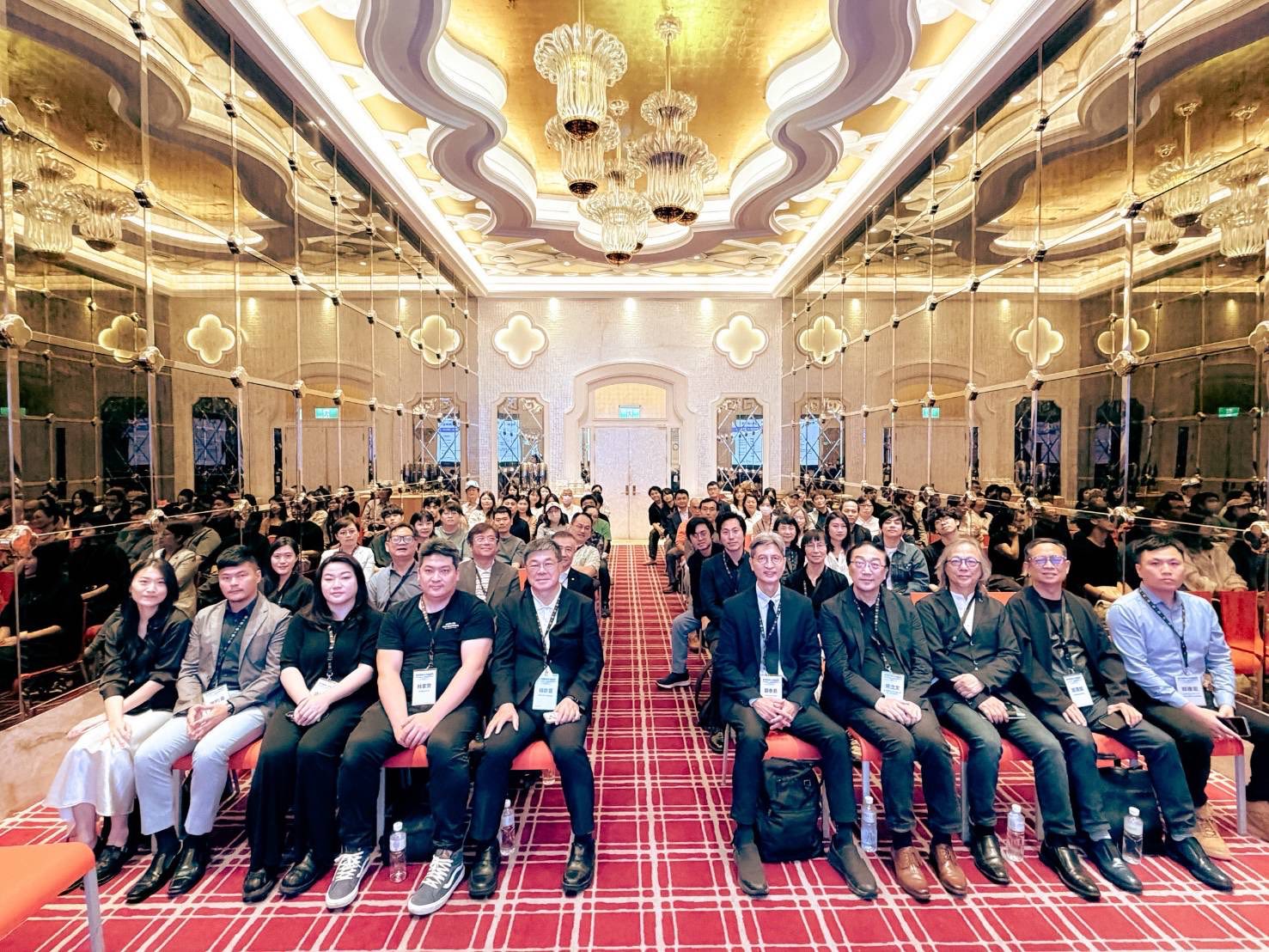
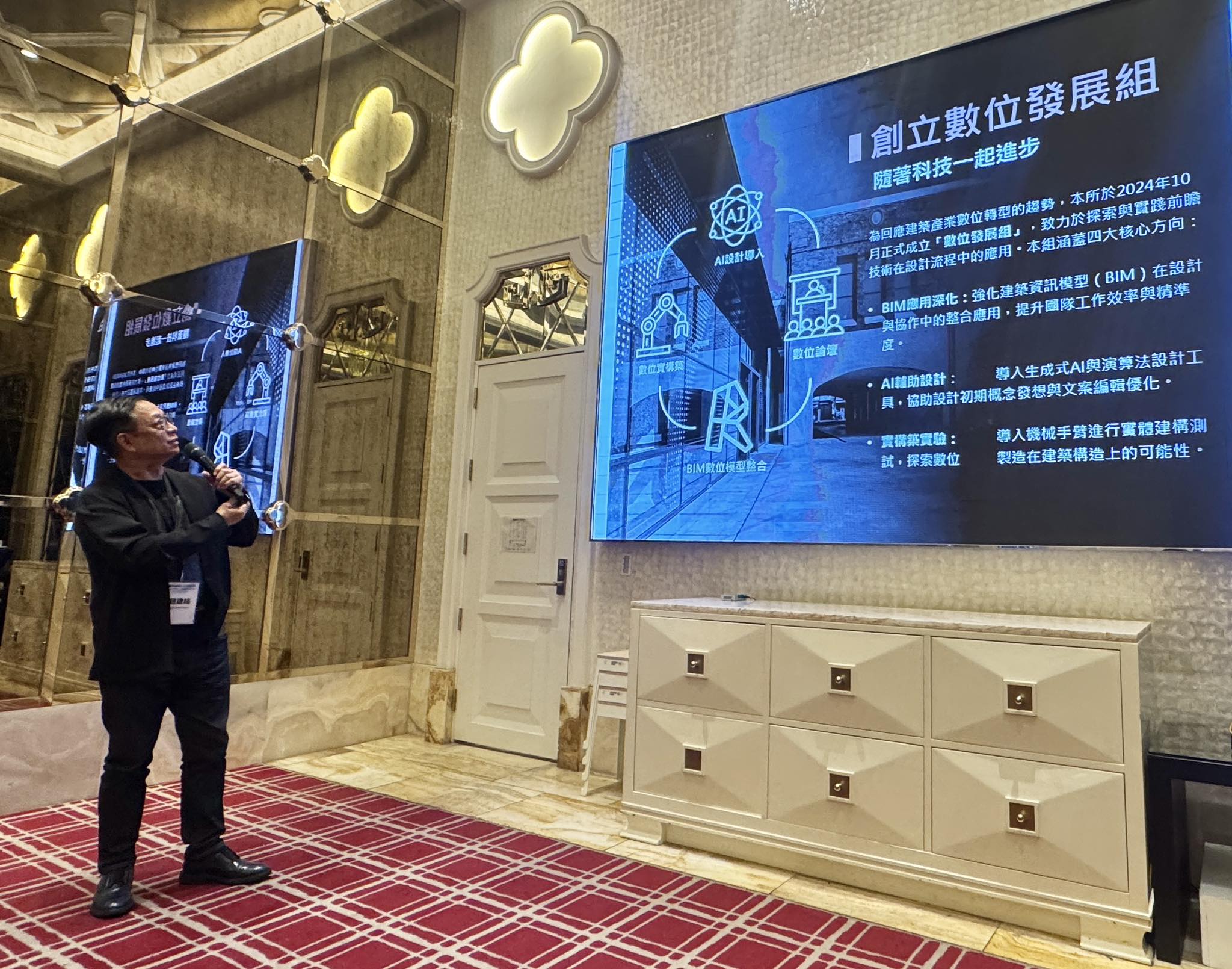
Taiwan Architecture AI Salon Series | Southern Session
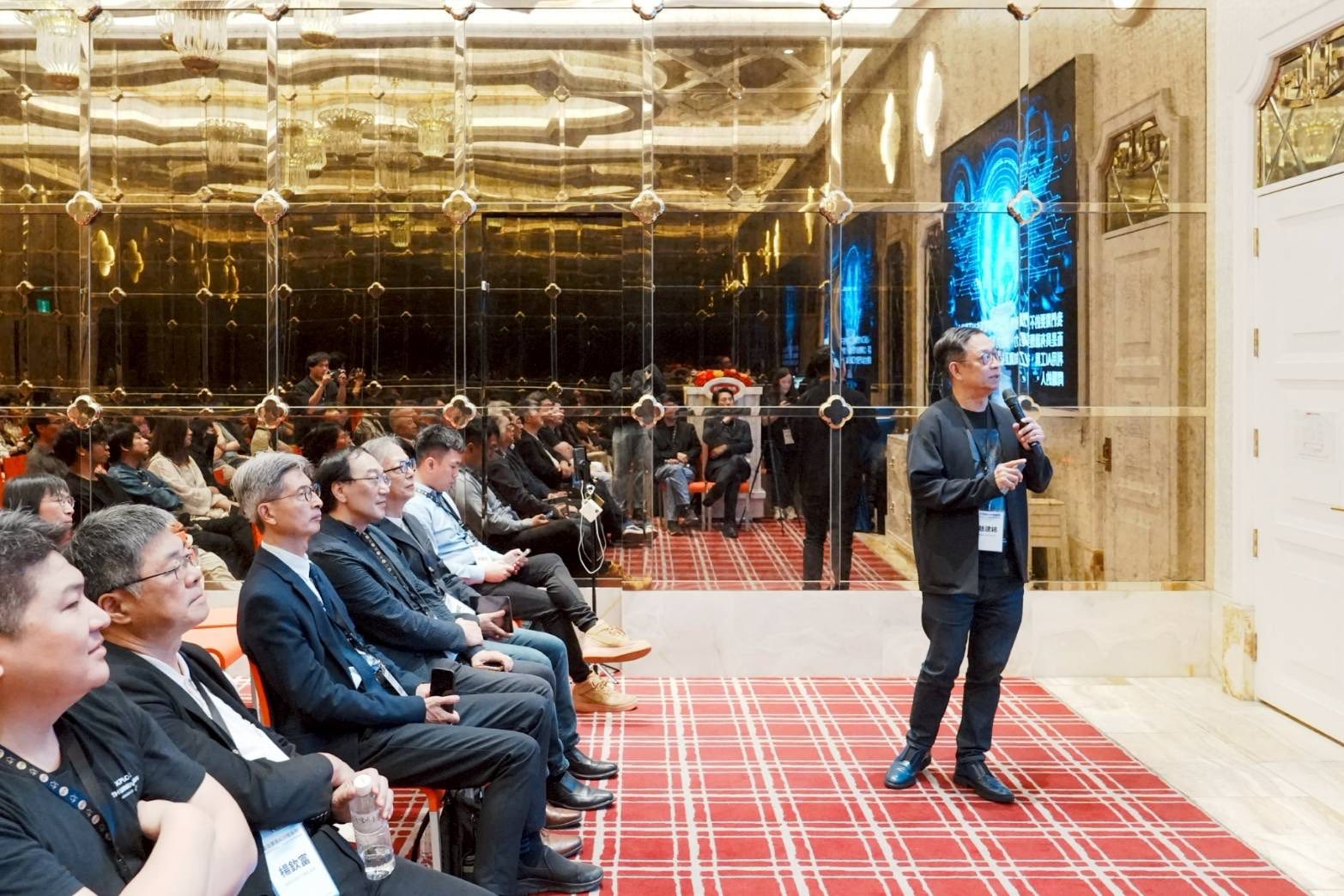
In the context of “AI anxiety,” our firm was invited to share recent applications integrating BIM technologies with AI.
If AI represents an industrial revolution, history reminds us that past technological shifts did not eliminate jobs, but rather redefined them—reshaping what kinds of work hold value.
So, what challenges in our industry can this transformation address? From our perspective, several key issues in the architecture field include:
- Fragmentation and lack of integration across the design–construction workflow.
- Labor shortages and the growing talent gap.
- The development and implementation of prefabrication methods.
- Future trajectories of technological advancement.
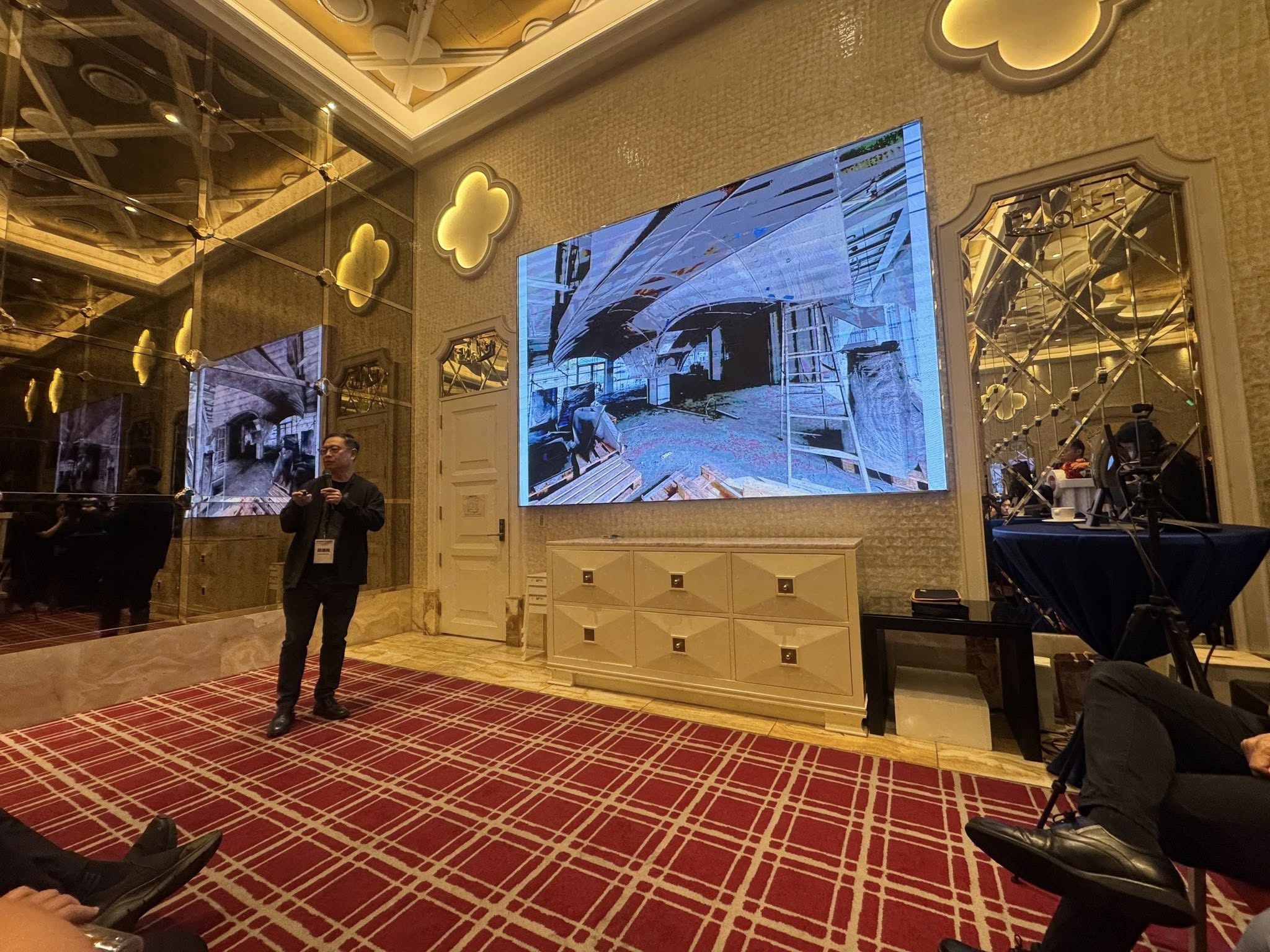
In response, our firm has focused on strengthening fundamental practices. All designers operate within BIM-based workflows, reinforcing standardized processes and data systems, alongside internal training and the exploration of robotic digital fabrication (physical AI).
Isn’t the development of AI fundamentally rooted in robust data infrastructures, which then enable further applications?
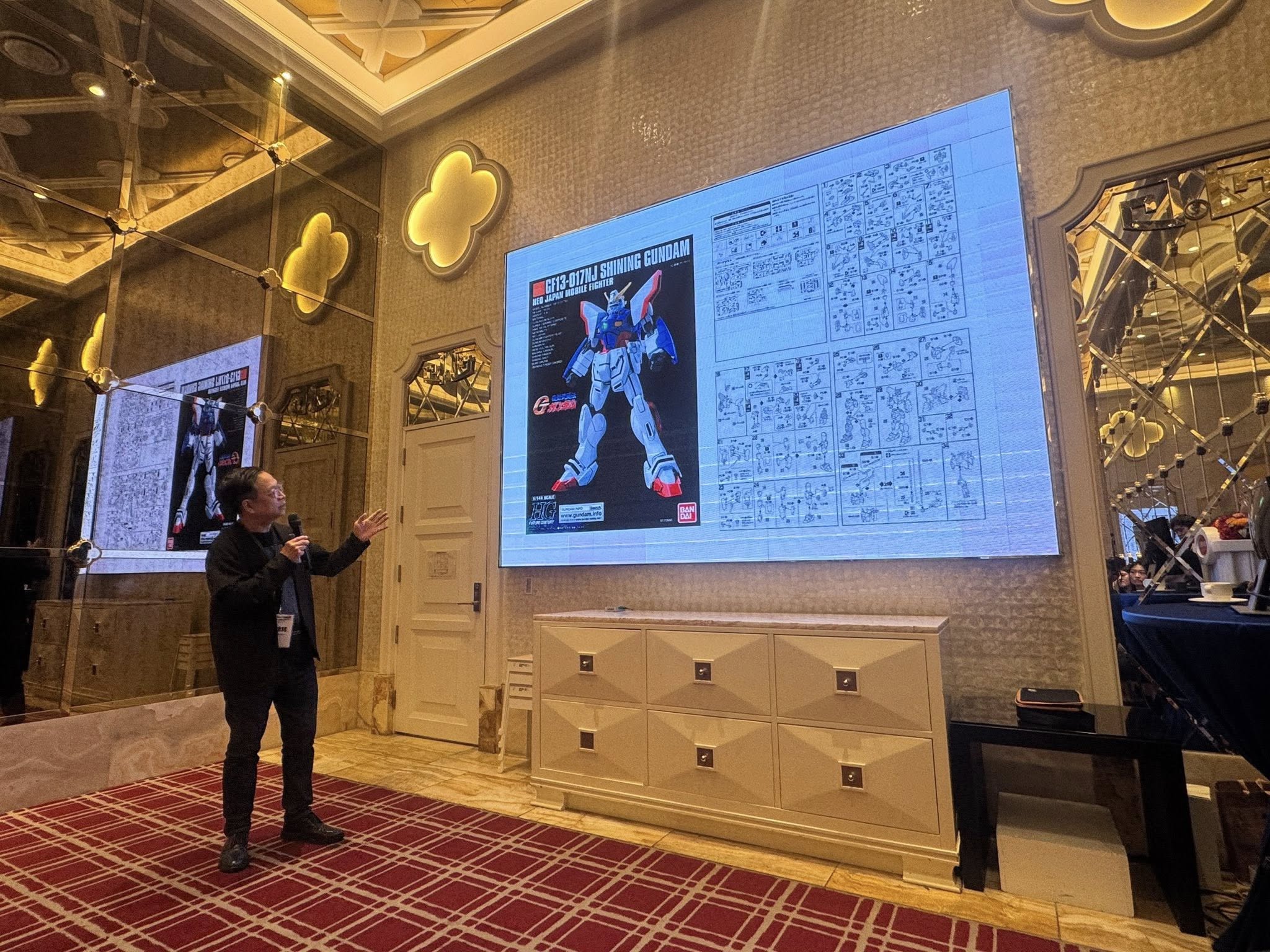
At the same time, our approach to drawing production has undergone a complete transformation. As I often analogize with a Gundam assembly manual: if such instructions were presented only as plan (horizontal projection) drawings, assembling a Gundam would be nearly impossible. Yet constructing a building is far more complex. Given the existing labor and experience gaps on construction sites, how many people today can fully interpret traditional plan-based drawings?
BIM is therefore not just a system—it is a design support tool, an interface integration platform, and a medium for digital information.
Ultimately, beyond simply using AI (which will inevitably become more accessible), what truly matters is cultivating individuals with critical judgment, integrative thinking, and cross-disciplinary understanding.